Common Instagram Page Transfer Mistakes That Can Get an Account Flagged or Banned
Quick answer: Instagram's security systems are built to detect account takeovers — the same signals that protect users from hackers can accidentally flag a legitimate purchase.
Instagram's security systems are built to spot unauthorized access. Meta's systems watch for sudden logins from new devices or places. They watch for fast changes to recovery details. They also watch for odd activity. This protects users from hackers.
The side effect is that a real account purchase can trigger the same alarms if handled carelessly. This can lead to a temporary lock or even a full suspension soon after a fully real transfer.
Why Instagram's Security Systems Can't Tell the Difference
To Meta's system, some events look the same for a hacker and for a buyer. A new device logs in from a different place. Soon after, the email and phone number change. The system cannot tell who is behind it. This is why the order and pace of a transfer matter. If you are careless, a legal, agreed sale can look just like an account takeover to automated detection.
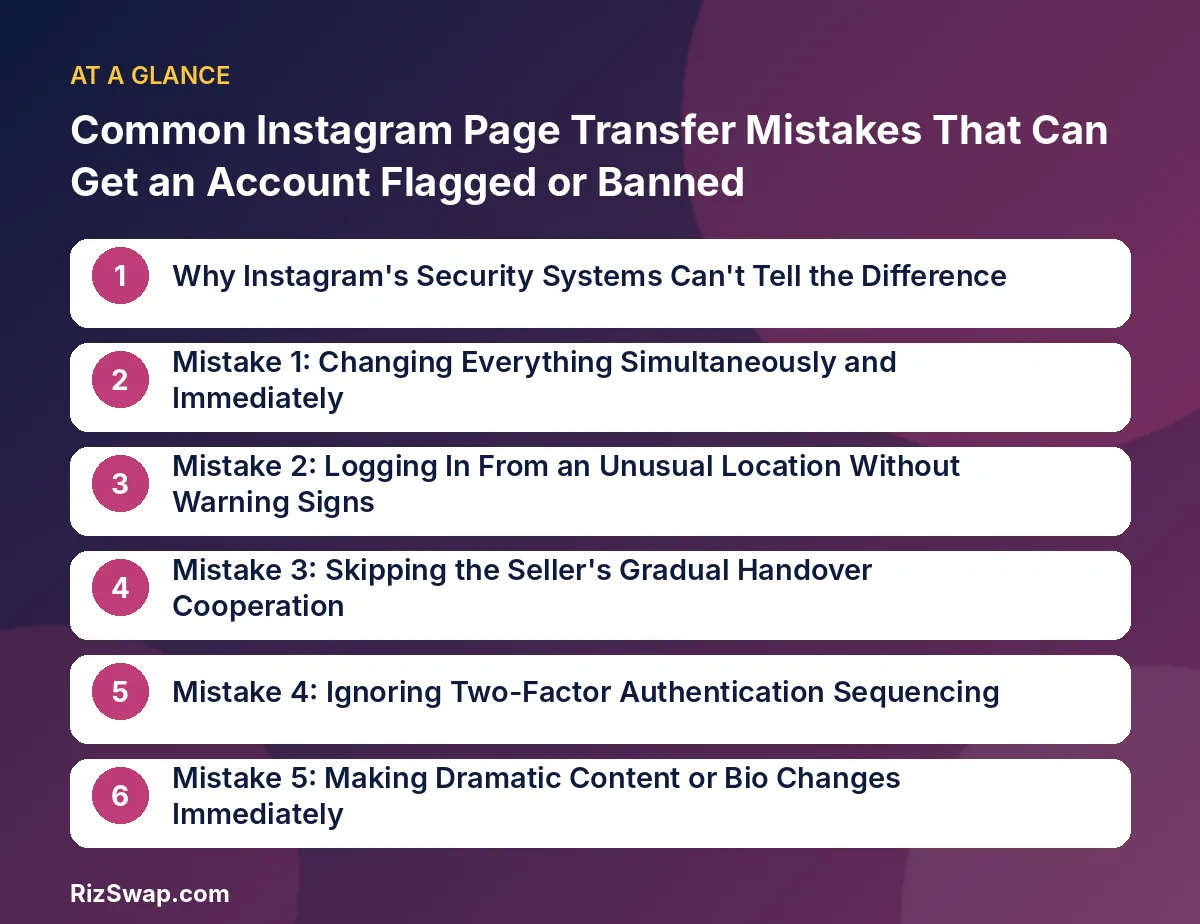
Mistake 1: Changing Everything Simultaneously and Immediately
Do not change the linked email, phone number, and password within minutes of the first login from a new device. This is one of the most common triggers for a security flag. Space these changes out. Verify login access first. Then wait before you change recovery details. This lowers the concentrated signal that looks most like an account takeover.
Mistake 2: Logging In From an Unusual Location Without Warning Signs
The buyer may be in a very different place from where the account was usually used. This alone can trigger a security check that asks for more verification. You may not be able to avoid it. But know that it may happen. Keep the previous owner on hand to help with any verification step Instagram asks for. Then you will not be caught off guard if a check occurs.
Mistake 3: Skipping the Seller's Gradual Handover Cooperation
Some sellers give you the credentials and vanish. Others stay available to help with any verification Instagram may trigger during the transition. These two cases carry very different risk for the buyer. A well-built sale agreement should include the seller's help with account verification for a reasonable time after the sale. Agree on this in writing before you finalize a purchase.
Mistake 4: Ignoring Two-Factor Authentication Sequencing
Do not remove the seller's two-factor authentication method before the buyer's own method is verified and active. That can leave the account briefly without proper 2FA coverage. Some security systems flag this on its own. The right order is as follows. The buyer adds their own 2FA method. The buyer confirms it works. Only then does the seller remove theirs. Never reverse this order.
Mistake 5: Making Dramatic Content or Bio Changes Immediately
There is also the security-flag risk. A page may suddenly change its bio, contact details, and content style all at once, right after a login from a new device. That adds to the signals Instagram's systems are already processing. Space out content and profile changes from the access-credential changes. This lowers the combined risk.
What to Do If a Security Flag Happens Despite Precautions
Instagram may flag the account for verification even after careful handling. Then the original seller can help confirm the account's ownership history. They may be asked for details only the original account holder would know. This greatly speeds up resolution. It is another reason a rushed, anonymous deal with no seller help is riskier. A properly built sale with a documented, cooperative relationship during the transition window is safer.
A Safer Transfer Sequence
- Buyer logs in with the provided credentials from their own regular device, ideally without making major account changes right away
- Buyer waits a short time (even just a day) to set a baseline "normal" access pattern before making further changes
- Buyer adds their own two-factor authentication method and confirms it fully works
- Seller removes their own 2FA and recovery details only after the buyer's own access is confirmed stable
- Content and profile changes come in gradually over the following days/weeks, not all at once
Why This Reinforces the Value of Escrow and Seller Cooperation
This risk is a strong argument for building seller cooperation into the purchase during the transition window. A one-time anonymous handover does not give you that. RizSwap's escrow system supports this kind of ongoing cooperation. So does the marketplace chat, which keeps both parties reachable.
Buyers can reach a seller for verification help if needed. They are not stranded with a flagged account and no way to fix it. That is a real risk in fully anonymous, off-platform transactions.
Why Patience During the First Week Pays Off
It is understandable to want to overhaul a new account's branding and settings right away. But the first week after transfer is when Instagram's systems are most sensitive to odd activity. Treat this time as a deliberate stabilization phase. Do not rush every planned change. This greatly lowers the odds that an avoidable security flag will disrupt an otherwise successful purchase.
Ready to see what's currently available? Browse Instagram account listings on RizSwap, all protected by escrow from listing to handover.
Final Thoughts
Instagram's account security systems exist to protect users. But they do not tell a hacker from a real buyer who completes an agreed purchase. The duty to avoid a false-positive security flag falls on how carefully you handle the transfer sequence.
Space out credential and content changes. Keep the seller available during the transition. Follow a deliberate, not rushed, handover sequence. These steps greatly reduce the risk that a newly purchased account gets flagged or locked soon after a real sale.