Best Time of Year to Buy or Sell a Social Media Account
Quick answer: A finance channel and a gift-guide channel peak at completely different times of year — understanding this timing can meaningfully affect what you pay.

Timing is not the first thing buyers and sellers think about in the account marketplace. But seasonal niches do affect price and demand during the year.
When does your account category peak? How does that affect buyers and sellers? Knowing this can improve results for both sides.
How Seasonality Affects Account Value
As our channel pricing guide explains, recent revenue and engagement have a big effect on the asking price.
In a seasonal niche, the same account can look much more or less valuable, depending on when its data was taken. The audience and content quality may not have changed at all.
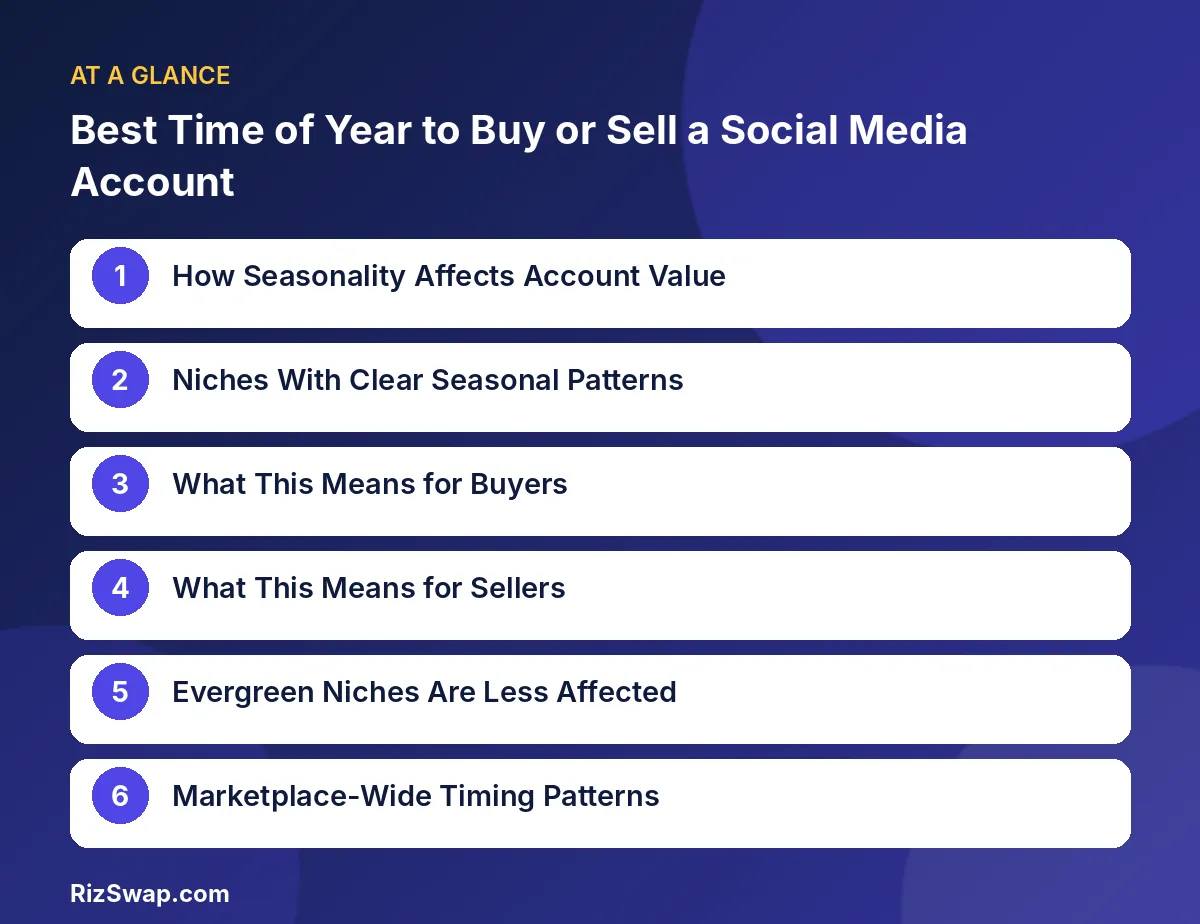
Niches With Clear Seasonal Patterns
Finance and Tax-Related Content
Tax and financial planning content peaks in the months before tax deadlines. In many markets it is quiet for the rest of the year. A listing made during the peak can look stronger than the account's normal yearly level.
Gift Guides and Holiday Shopping Content
Channels and pages about gift ideas and holiday shopping do best in the last quarter of the year. The rest of the year is much quieter.
Fitness and New Year Resolution Content
Fitness, weight loss, and self-improvement content peaks in the weeks after New Year. People search for it as they set resolutions. Then it settles to a lower level for the rest of the year.
Back-to-School and Education Content
Content for students and education topics spikes when school terms start. The dates differ a little by region and school calendar.
What This Means for Buyers
Ask whether the recent data shows a seasonal peak or the normal level for the rest of the year. Judge value from a yearly average. Do not use only the latest month, which may be a peak. Our channel cost guide covers seasonality in more detail.
Buying in a niche's off-season can help too. Fewer buyers compete, so you may negotiate a better deal.
What This Means for Sellers
If your niche is seasonal, list during its peak. Recent data then shows your account's earning power at its best. Buyer interest in that niche is also higher, which can mean a stronger price and a faster sale.
Be open about it. Say the numbers are seasonal. Do not present a peak month as a flat, year-round level.
Evergreen Niches Are Less Affected
Some niches have no strong season. Examples are general entertainment, ongoing hobby communities, and most faceless formats from our faceless channel guide.
Timing matters less here. Buyers and sellers can deal at any time without worrying about distorted data.
Marketplace-Wide Timing Patterns
The whole marketplace also has busy and quiet periods. Buyer demand may rise at the start of a new year, when people and businesses set new goals for their online presence and income.
If your timing is flexible, think about listing in a busy period. This is separate from any niche season.
How to Evaluate Timing for Your Specific Situation
- Check whether your niche or account is really seasonal. Use the account's own past data, not assumptions.
- Buyers: ask for data covering at least a full year. This helps you tell a real season from a one-time spike.
- Sellers: be open about seasonality in the listing. If buyers find unexplained swings later, they may stop trusting the rest of your listing.
Balancing Timing Against Urgency
Timing can change price and demand. But do not delay a good deal just to chase the best season, especially if you have a real reason to act soon.
Timing is something to weigh. It is not a reason to skip a strong deal that arrives outside the peak.
Final Thoughts
Seasonality is often overlooked. It can change both the value buyers see and the way a negotiation goes. It depends on when the deal happens compared with the niche's peak and quiet times.
Buyers who adjust for it when they read recent data do better. So do sellers who time their listing with care and honesty. For many niches, not every month is equal.