How to Build Trust as a New Seller With No Reviews Yet
Quick answer: Every experienced seller with dozens of positive reviews started their very first listing with zero transaction history — here's how to bridge that gap.
Buyers weigh platform reputation and transaction history when they judge a seller. Our seller-identity verification guide covers this. That creates a clear challenge for honest new sellers. How do you build buyer confidence before you have any reviews or completed sales to show? This guide gives practical strategies for this cold-start problem.
Understand What Buyers Are Actually Worried About
No reviews does not mean a seller is dishonest. It means buyers have less outside evidence. So they put more weight on the signals within the transaction itself. This helps new sellers focus their effort. Do not try to fake a reputation that does not exist yet. Instead, give exceptionally strong evidence in the listing and negotiation.
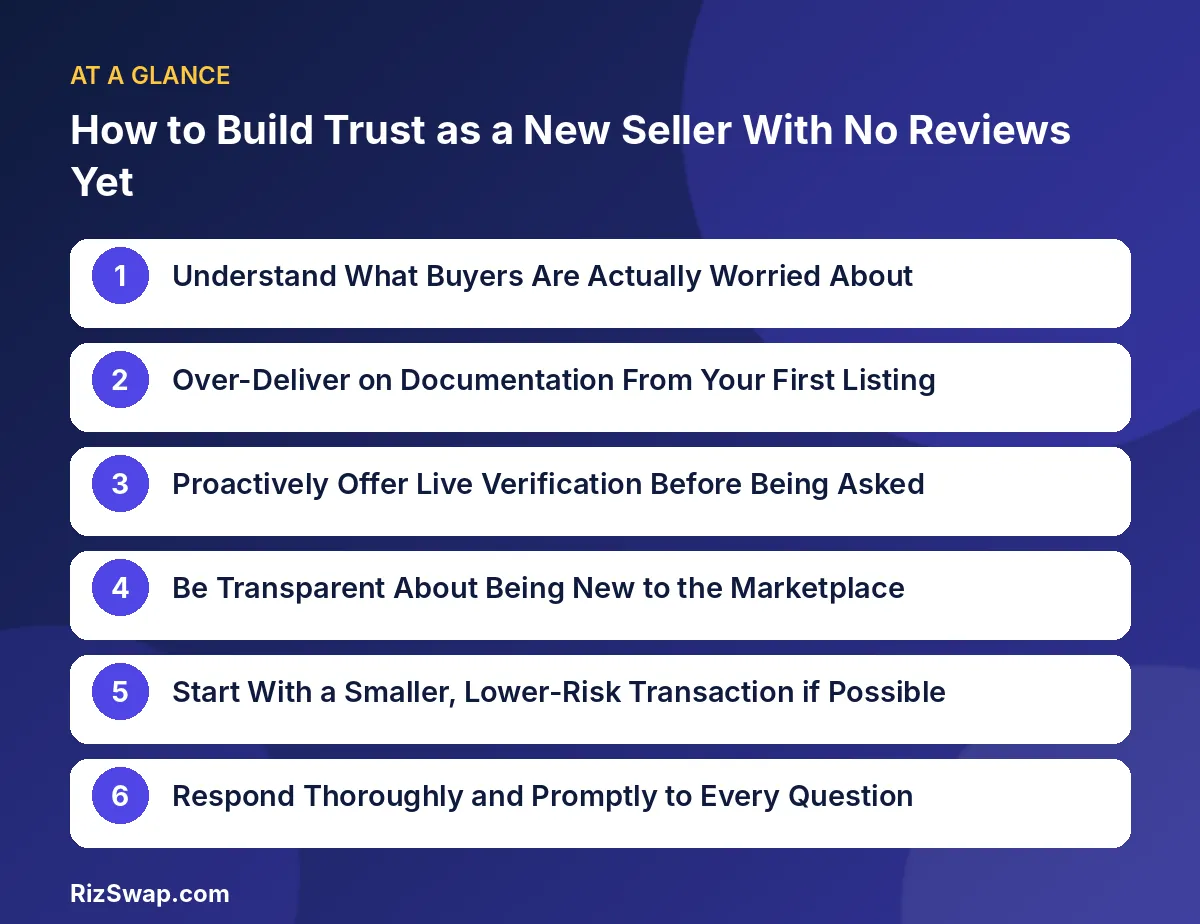
Over-Deliver on Documentation From Your First Listing
Our screenshot and verification guide gives the details. New sellers gain most by going beyond minimum documentation standards. Use full-context screenshots. Add screen recordings that show live access. Share detailed growth trend data, not just bare current numbers. This thoroughness does more to make up for missing reviews than almost anything else a new seller can do.
Proactively Offer Live Verification Before Being Asked
Do not wait for a skeptical buyer to ask for verification. State in your very first listings that you welcome live, supervised verification by video call. This signals confidence and openness. It speaks directly to the trust gap a new seller faces. More than almost any other step, it helps a first-time seller's listing compete with established sellers who have review history.
Be Transparent About Being New to the Marketplace
Do not avoid the topic. Note briefly and honestly that this is your first listing on the platform. Pair it with your promise of thorough verification and clear communication. Buyers tend to respond better to this.
It beats ignoring the issue or seeming to hide a lack of history. Buyers usually respond well to plain honesty. This is even more true when you back it with strong evidence elsewhere in the listing.
Start With a Smaller, Lower-Risk Transaction if Possible
You may have several accounts or assets you plan to sell. If so, list a smaller, lower-value one first. Build initial reviews and platform history before you list your most valuable asset. This is a reasonable way to build a track record before higher-stakes deals. Our seller-verification guide advises buyers in a similar way. It tells them to look harder as transaction value rises.
Respond Thoroughly and Promptly to Every Question
New sellers gain far more from prompt, detailed replies to buyer questions. Without review history, this responsiveness becomes a trust signal. A buyer may be deciding whether to take a chance on an unreviewed seller. How thoughtfully and quickly that seller engages in early conversations strongly influences the choice.
Leverage Escrow Explicitly in Your Communication
Do not assume buyers already understand what escrow protects. Remind cautious buyers of it. The marketplace's escrow system protects the whole transaction, including payment security and verified handover. It does so whatever either party's reputation. See our general escrow explainer. This can ease a hesitant buyer's worry about dealing with an unreviewed seller.
Consider Pricing Slightly Competitively for Your First Few Sales
Not every new seller needs this. But you can price your first listing or two slightly below what an identical account from an established seller might fetch. This can offset buyer hesitation during the trust-building phase. It is not about underselling your asset's real value. A small, temporary price cut can help you win the first few reviews. Those reviews then support full-value pricing on later listings.
Request Reviews Actively After Successful Transactions
You may complete a transaction successfully. Do not assume a satisfied buyer will leave a review on their own. Ask politely and directly, as suggested in our seller guide on selling for cash. This raises the rate at which good experiences become visible platform reputation. It speeds your way out of the new-seller trust gap.
What Not to Do
Do not create false urgency or use pressure tactics to make up for missing reviews. Our scam-avoidance guide covers why. Buyers link these tactics with fraudulent listings. A new but honest seller who uses them sends exactly the wrong signal. It happens at the moment they most need to build trust.
Remember That Every Buyer Was Once a First-Time Buyer Too
New sellers face a trust gap. Many buyers on any marketplace are also making their first purchase. They appreciate a seller who makes the process feel transparent and low-risk. Treat your first few transactions with patience and thoroughness. This helps both sides of the shared learning curve. It is not just about your own reputation goal.
Final Thoughts
Every experienced, highly-reviewed seller on any marketplace started with zero transaction history. The trust gap new sellers face is real, but you can bridge it. Use thorough documentation, proactive verification offers, honest communication, and prompt replies to buyer questions.
Some new sellers hope buyers will overlook the lack of reviews. Those who focus on these practices instead win strong first sales. They build the reputation that makes every later listing easier.