How to Negotiate Price When Buying a Social Media Account (Without Losing the Deal)
Quick answer: Aggressive lowballing usually kills a deal before it starts.

Negotiating the price of a YouTube channel, TikTok account, or Instagram page is not like haggling at a market. Sellers of established digital assets usually have real data to back their asking price. An aggressive lowball offer with no support often ends the talk before it starts. This guide shows how experienced buyers negotiate price in this market. The goal is a fair deal that respects the seller's data.
Start by Understanding What the Asking Price Is Based On
Before you make a counteroffer, ask the seller what their price is based on. Is it a revenue multiple? Is it recent comparable sales they know of? Or is it just a round number they picked? Once you know the seller's reasoning, you negotiate from a stronger position. You can answer their actual logic instead of guessing at it.
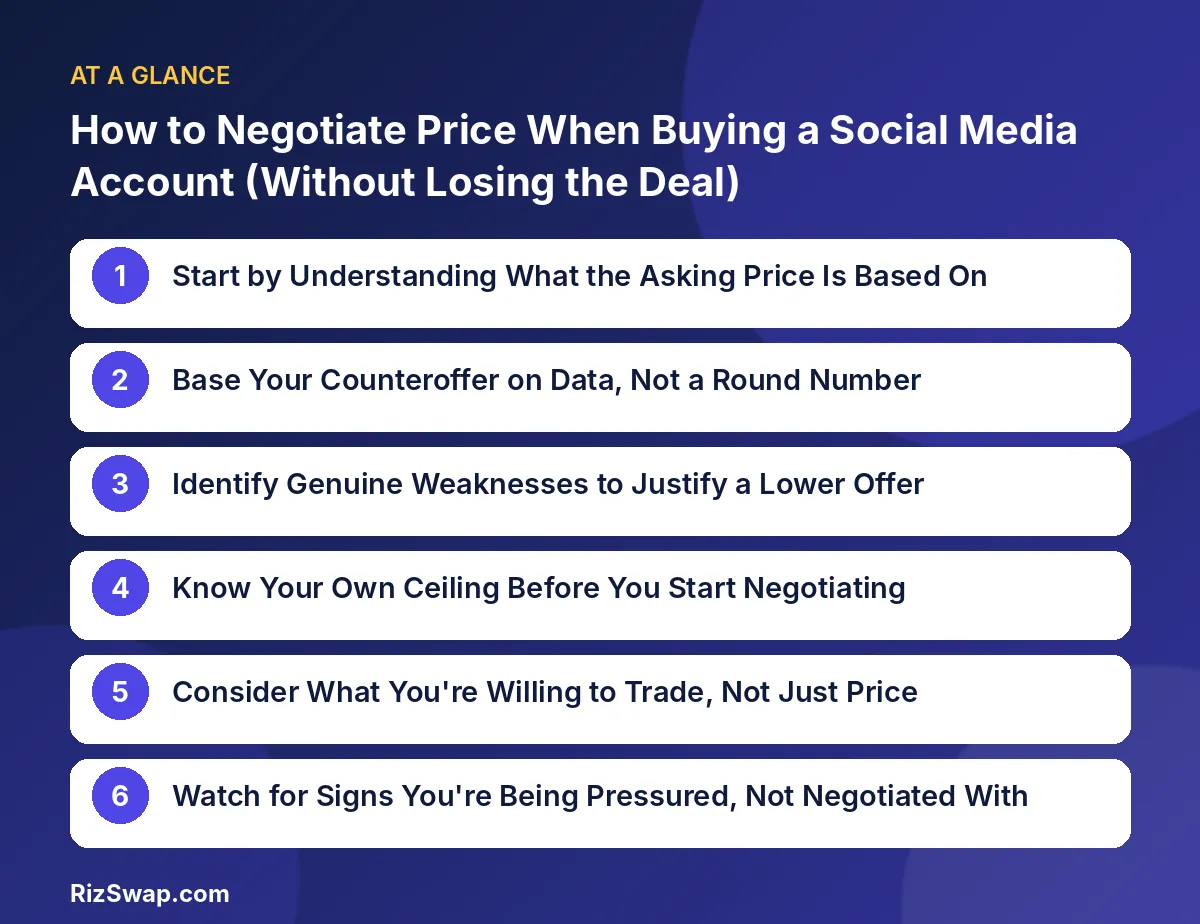
Base Your Counteroffer on Data, Not a Round Number
A counteroffer with clear reasons gets taken far more seriously. For example: "Based on the average engagement rate across your last 15 posts, and comparable listings now active in this niche, I'd value this closer to X." A bare lower number with no reason gets far less respect.
Sellers who worked hard to build an account respond better to buyers who did their homework. They respond worse to a reflexive lowball offer.
Identify Genuine Weaknesses to Justify a Lower Offer
Do not negotiate on "I want it cheaper" alone. Find specific, real factors that justify a different value. Examples are a recent dip in engagement, a niche with below-average CPM, an account younger than comparable listings, or gaps in the posting history.
Specific factors give the seller something concrete to answer. A vague wish for a discount does not. Specific factors also often open room for a middle-ground price that both sides find fair.
Know Your Own Ceiling Before You Start Negotiating
Work out your maximum fair price before you start. Use the revenue-multiple or engagement-based methods in our channel pricing guide and niche guides. Buyers with no clear ceiling are more likely to get pulled into a bidding war. Momentum in the chat can push them above what the account is truly worth to them.
Consider What You're Willing to Trade, Not Just Price
Price is not the only term you can negotiate. A seller might accept a slightly lower price for a faster deal. A seller might also value a buyer with a strong platform reputation, such as visible reviews or completed transactions.
That buyer may win over an unknown buyer with a slightly higher offer. Find out what else matters to this seller. Sometimes you only need to ask. This can unlock a better deal than focusing on price alone.
Watch for Signs You're Being Pressured, Not Negotiated With
A seller who confidently defends a well-supported price is different from a seller who uses pressure tactics. Pressure tactics include fake urgency, claims of other buyers that you cannot verify, or refusing to explain the price at all. The first is a normal, healthy negotiation. Treat the second with caution, as covered in our scam-pattern guide.
When to Walk Away
Not every negotiation should end in a deal. Say the asking price stays well above what the account's data supports. Say the seller will not give specific reasons. Then walking away is often the right call. There are usually comparable listings elsewhere in the marketplace. Overpaying because you are tired of haggling, or because you have spent so much time on it, rarely works out well later.
Negotiating as a Seller: The Flip Side
Sellers gain from the same data-driven approach in reverse. When you get a lowball offer, point to the data that supports your asking price. Do not simply refuse. Do not drop the price just to end an awkward talk. A seller who can clearly explain why their price is fair, using the same specific reasoning, holds their price better. A seller who negotiates on instinct holds it less well.
How Negotiation Interacts With Escrow
Price negotiation happens before the deal starts. Escrow protects the deal once terms are agreed. The final agreed price should match the escrow transaction amount exactly. Suppose either side pushes to "settle the difference outside the platform" after you agree a price through marketplace channels. That is a red flag. Treat it like any other off-platform payment request covered in our scam-avoidance guide.
A Practical Negotiation Script
A good opening counteroffer might read like this: "I've reviewed the engagement data and comparable listings in this niche. Based on an average engagement rate of X% and current market pricing for similar accounts, I'd like to offer Y. I'm also happy to hear what factors you feel justify the current asking price, if I'm missing something."
This message shows real research. It invites the seller's view instead of dismissing it. It sets up a team effort, not a fight, from the first message.
Final Thoughts
Good negotiation in the social media account marketplace comes down to data-backed reasoning. Aggressive lowballing does not work. Sellers who built valuable accounts respond far better to buyers who show they understand the account's real worth. Reflexive discount demands get a worse response. This approach leads to fairer outcomes for both sides. It also keeps the good-faith relationship that makes the final escrow-protected transaction smoother.